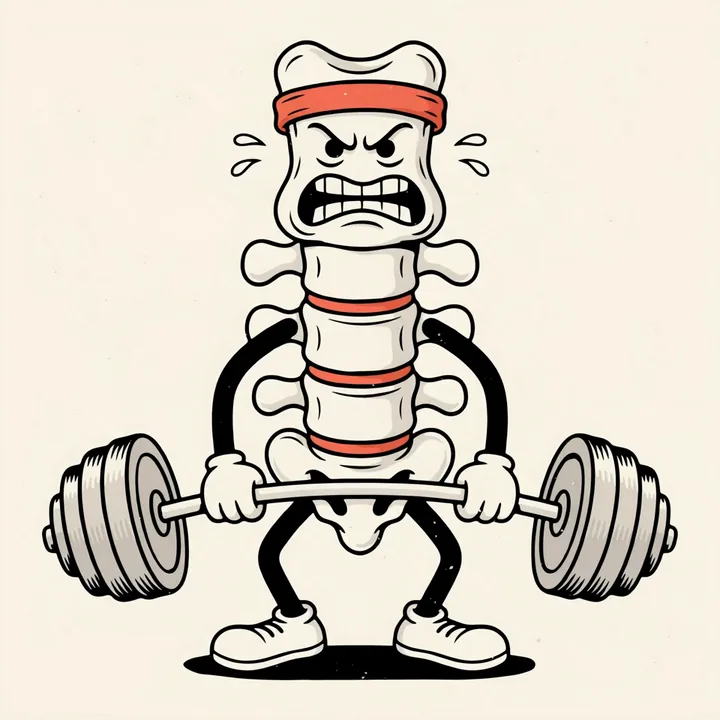
You’ve tried the stretches. You’ve seen the physios. Your back still hurts.
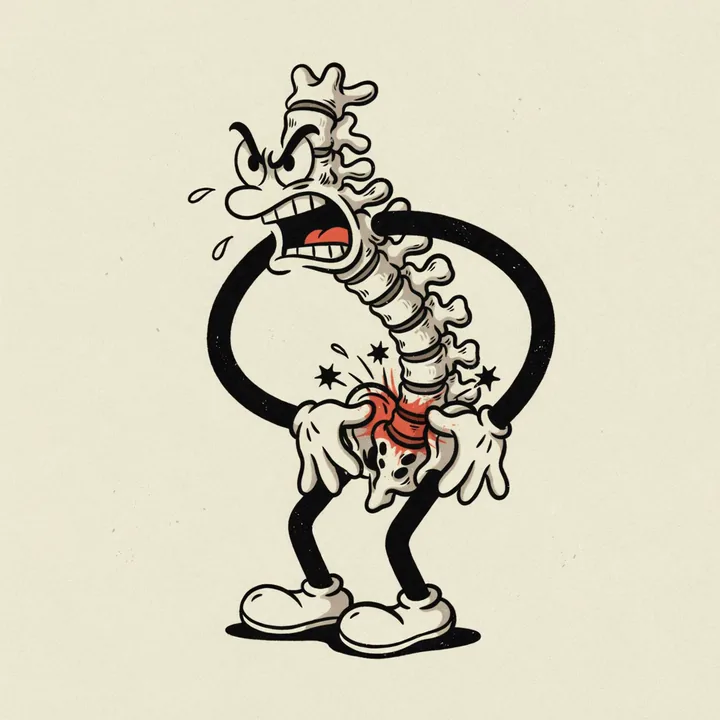
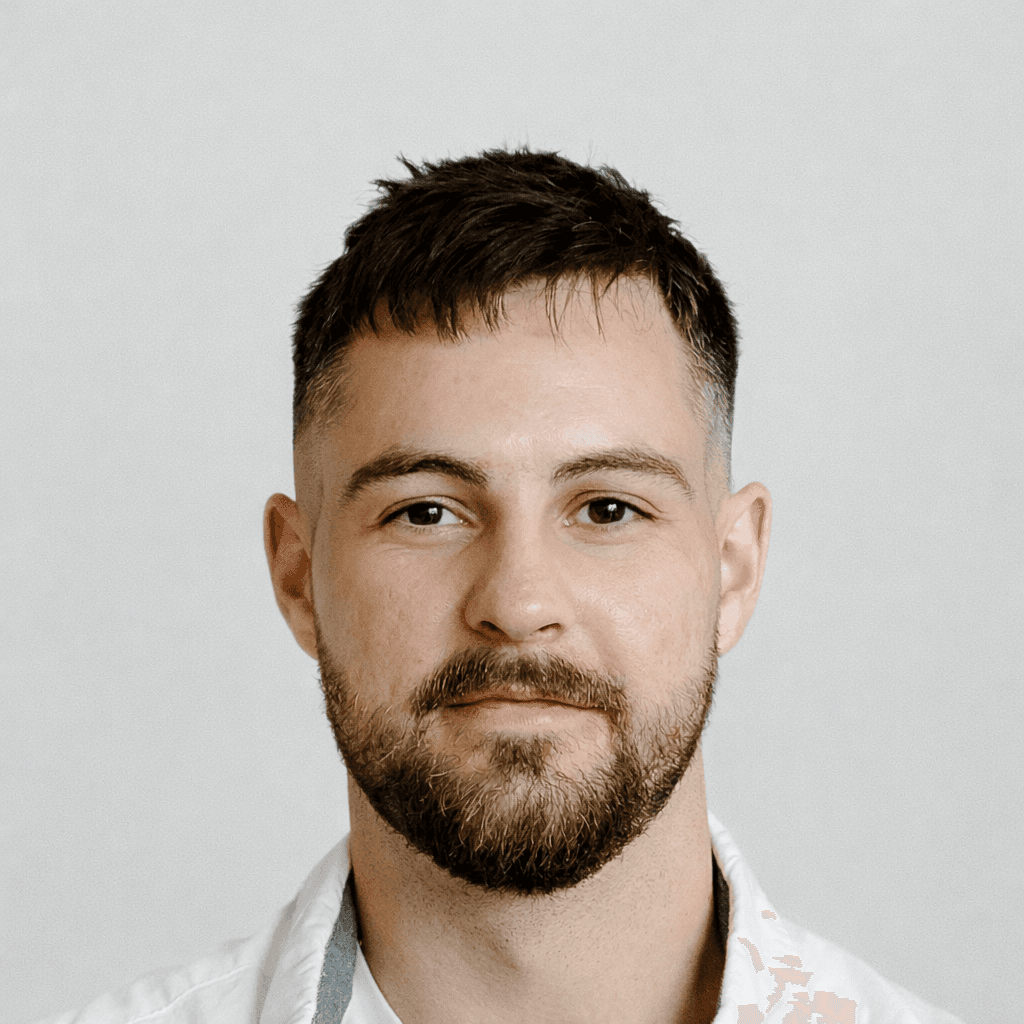
I studied why most back pain advice doesn’t work. Then I built something that does.
I spent my PhD in a spine biomechanics lab studying how discs degenerate and behave mechanically. After studying the biomechanical underpinnings of the spine, it became clear to me that most of the advice that people get for back pain is generic and often incorrect. Effective rehabilitation requires identification of pain patterns and a matching plan.
A flexion intolerant pattern and an extension sensitive phenotype require different approaches. But most programs treat them the exact same, further provoking pain and delaying progress.
Back Again starts by identifying your pattern. Then it builds a program that matches it. The assessment uses validated questionnaires from the clinical research literature. The plans are structured around evidence-based principles compiled by me.
- PhD · Spine Biomechanics
- 7 Peer-Reviewed Publications
- ISSLS Award Winner
- NSERC Scholar
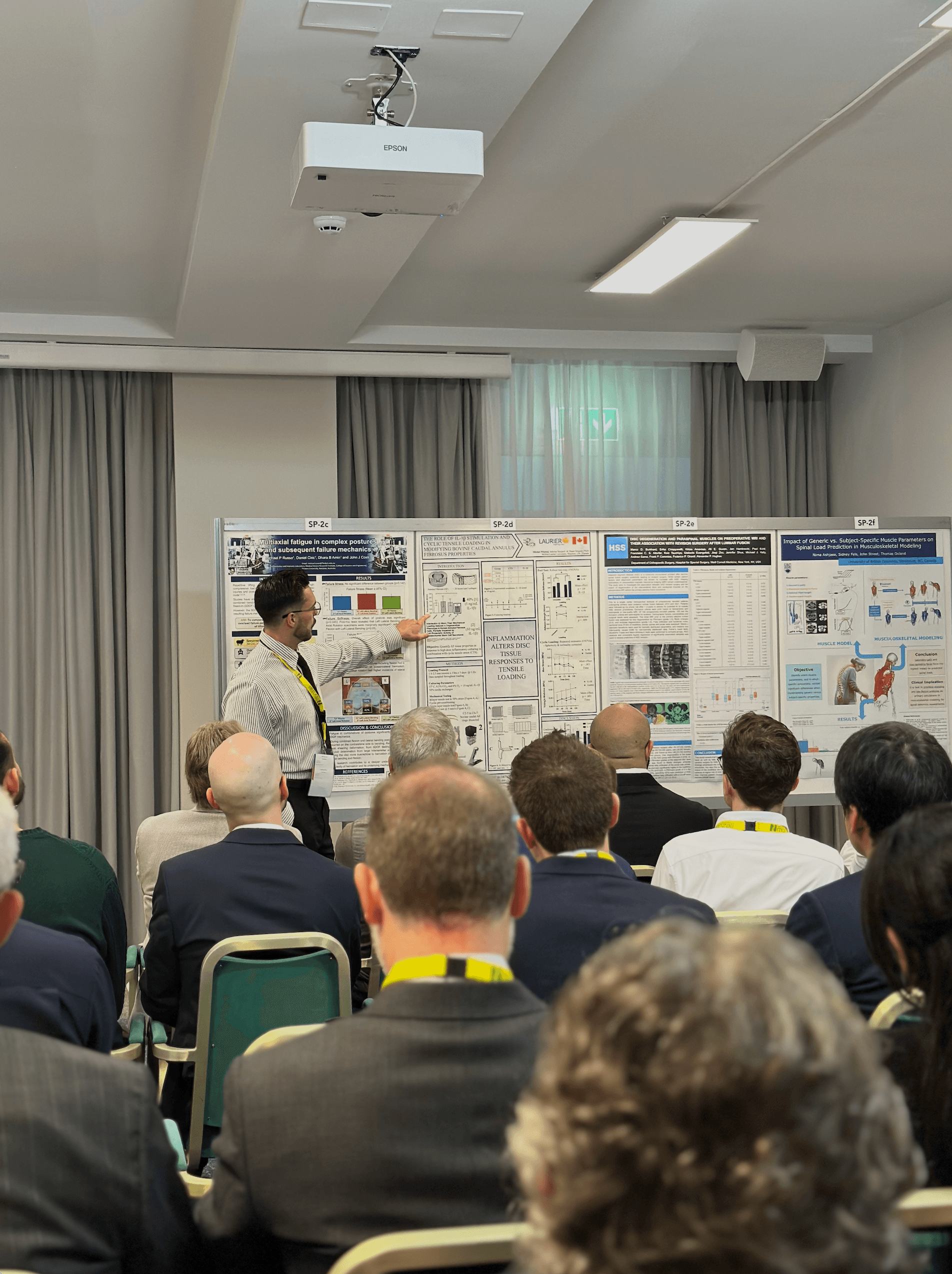
Table 1 · Methodology
How the assessment works
The assessment uses the same validated clinical tools found in published studies and clinical settings. Four steps, each with a specific purpose.
Step 01: Validated questionnaires
The RMDQ (Roland-Morris Disability Questionnaire) measures how your back pain affects daily activities. The Back-PAQ (Back Pain Attitudes Questionnaire) captures beliefs and fears about pain, because what you believe about your pain changes how you recover [Darlow et al., 2014].
Step 02: Structured history
A detailed intake captures your movement patterns, daily activities, and relevant context. This is the information a clinician would ask in a first appointment, structured so nothing gets missed.
Step 03: Phenotype classification
Your responses are classified into one of six biomechanical phenotypes based on how your spine responds to specific movements and loads. These aren’t arbitrary labels. They’re based on movement-pattern research from the clinical literature.
Step 04: Matched program
Each phenotype gets a structured rehab program built around the movements, progressions, and education that the evidence supports for that specific pattern. A flexion-sensitive spine and an extension-sensitive spine need different approaches.
Your back pain has a pattern. The right plan starts by identifying it.
Table 2 · Research & Publications
Peer-reviewed publications by Mitch Whittal, PhD
- 2025
The biomechanical properties of porcine intervertebral disc tissue treated with different fixation solutions
Journal of the Mechanical Behaviour of Biomedical Materials
- 2025
Mechanical age-related differences in the human cadaveric annulus fibrosus
Journal of the Mechanical Behaviour of Biomedical Materials
- 2025
Does Annulus Fibrosus Lamellar Adhesion Testing Require Preconditioning?
Journal of Biomechanical Engineering
- 2025
An investigation of the mechanism of adjacent segment disease in a porcine spine model
Clinical Biomechanics
- 2022
TAK-242 treatment and its effect on mechanical properties and gene expression associated with IVD degeneration in SPARC-null mice
European Spine Journal
- 2021
Mechanical Consequence of Induced Intervertebral Disc Degeneration in the SPARC-Null Mouse
Journal of Biomechanical Engineering
- 2020
High Load With Lower Repetitions vs. Low Load With Higher Repetitions: The Impact on Asymmetry in Weight Distribution During Deadlifting
Frontiers in Sports and Active Living
Plate III · Awards & Recognition
Recognised by the field
- A.01International Society for the Study of the Lumbar Spine (ISSLS)
Best Special Poster Award
Milan, 2024
- A.02NSERC
Alexander Graham Bell Canada Graduate Scholarship (CGS-D)
Doctoral, 2021
- A.03Wilfrid Laurier University
Medal for Academic Excellence
Top Master’s student, 2020
- A.04NSERC
Canada Graduate Scholarship (CGS-M)
Master’s, 2019
- A.05Wilfrid Laurier University
Joan Heimbecker Award
Highest GPA, Kinesiology graduating class, 2018
Table 3 · Trust & Safety
What I commit to
Back Again is built on three commitments. They're the reason this can exist as a research-backed product instead of another internet promise.
Coaching, not a clinic
Back Again gives you a structured plan built using evidence-based principles compiled by Mitch. Back Again does not diagnose, and does not replace hands-on medical care for those with red-flag symptoms.
Red flags get flagged
If your assessment surfaces anything that should be reviewed by a clinician, Mitch tells you so directly and recommends in-person care.
No guaranteed cures
Recovery from back pain isn’t a straight line and nobody can promise you a fix. What you get is an evidence-based plan, plain language, and someone who will be honest with you about what’s known and what isn’t.
Ready when you are
Find the path forward.
Structured rehab programs and educational materials for back pain.
See the programs