Exercise library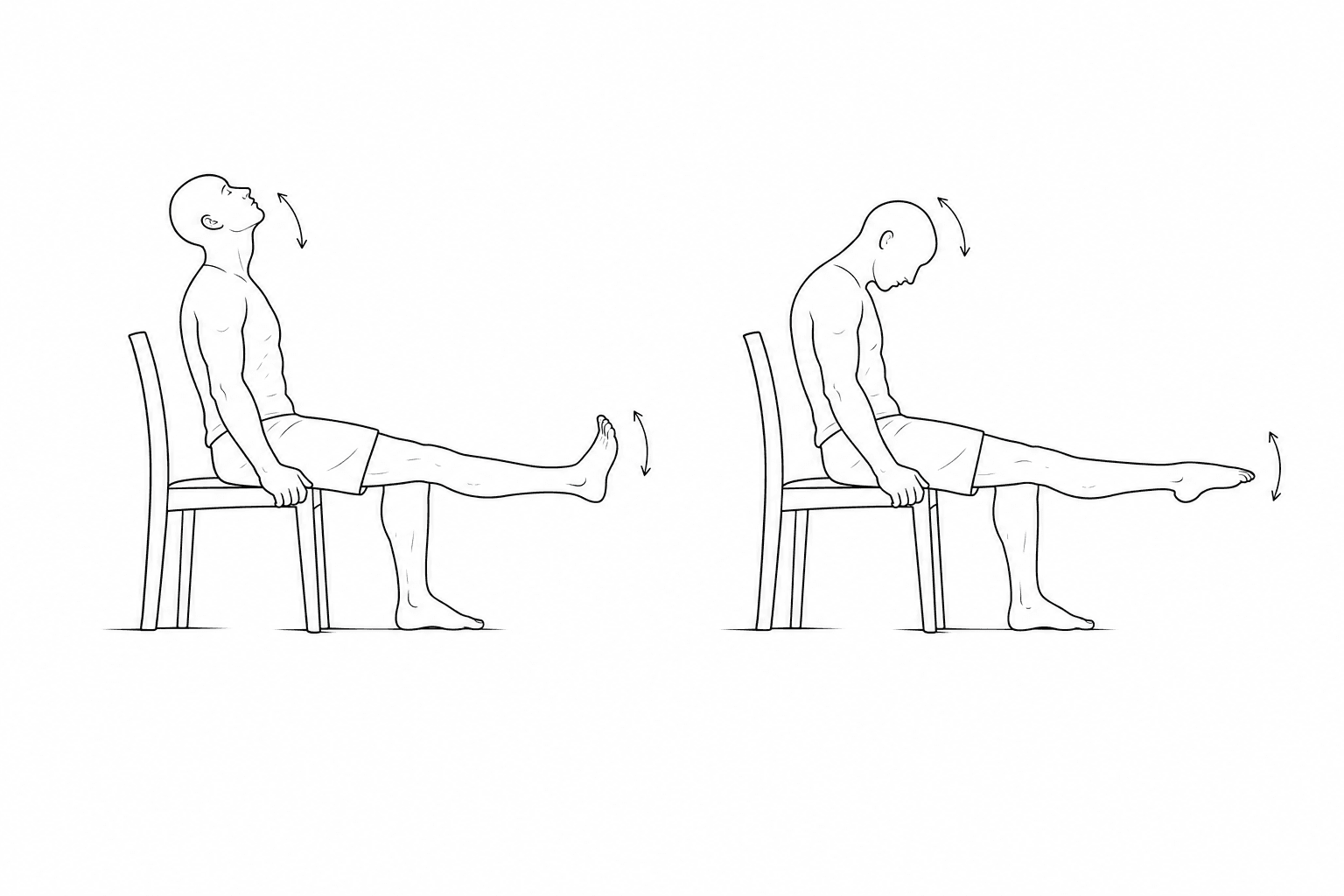
Nerve Sensitivity
Seated sciatic nerve slider
How to do it
- 1Sit tall near the front edge of a chair with both feet flat on the floor.
- 2Bring your leg and chin up together: straighten your working leg out in front of you while you lift your chin and look up. The leg stays extended from here on.
- 3Now sync your ankle and your head. Pull your toes back toward you as your chin lifts up, then point your toes away as your chin drops down toward your chest.
- 4Repeat that rhythm, slow and steady, for 20 or more reps, then switch legs. The rhythm matters more than the range: ankle and chin move together, like they're on the same string.
- 5STOP rule: if symptoms spread further DOWN your leg (peripheralizing), stop for the day. If they draw back UP toward your spine (centralizing), continue. Progressive weakness, saddle or groin numbness, or any bladder or bowel changes mean stop and seek medical care.
Why this exercise
This is the preferred slider because the synchronized head movement keeps neural tension low. When your toes pull back, the nerve is tugged from the bottom end; lifting your chin at that same moment feeds in slack from the top, so the nerve slides through its path instead of being stretched at both ends. Floss sliding back and forth, not a rope pulled tight.
Make it easier
- Can't hold your leg up comfortably? Use the lying slider instead; the floor does the holding.
- Soften the knee; the leg doesn't need to be perfectly straight.
- Smaller ankle and head movements.
Make it harder
- More reps (25-30 per leg) before anything else.
- A slightly straighter knee, only if symptoms stay calm.