Lesson 01 · 6 min read
The Daily Movement Toolkit
This section describes a practical set of skills and tips that you can implement immediately. I've talked to many people with back injuries, and in some cases, I couldn't believe the lack of practical information that they received. People are often told 'no exercise' and to rest. Guess what… even with back pain, we're still people, and we need to move!
Movement skills
How to brace your core
- Breathe in and expand your belly.
- After expanding, tense your stomach as if someone were about to hit it.
- Keep breathing while holding the brace; it should feel supportive, not like you are holding your breath.
- Use this light brace before and during movements that load your back, like:
- Bending over
- Lifting
- Getting up from the floor
- Carrying something heavy
Important: you do not need to hold a brace all the time, just in situations where your back may be vulnerable.
How to bend down / over
- Use the light brace from above before you start to bend.
- Hinge at your hips and push your hips back with a small knee bend.
- Keep your back in a neutral (straight) position and do not round.
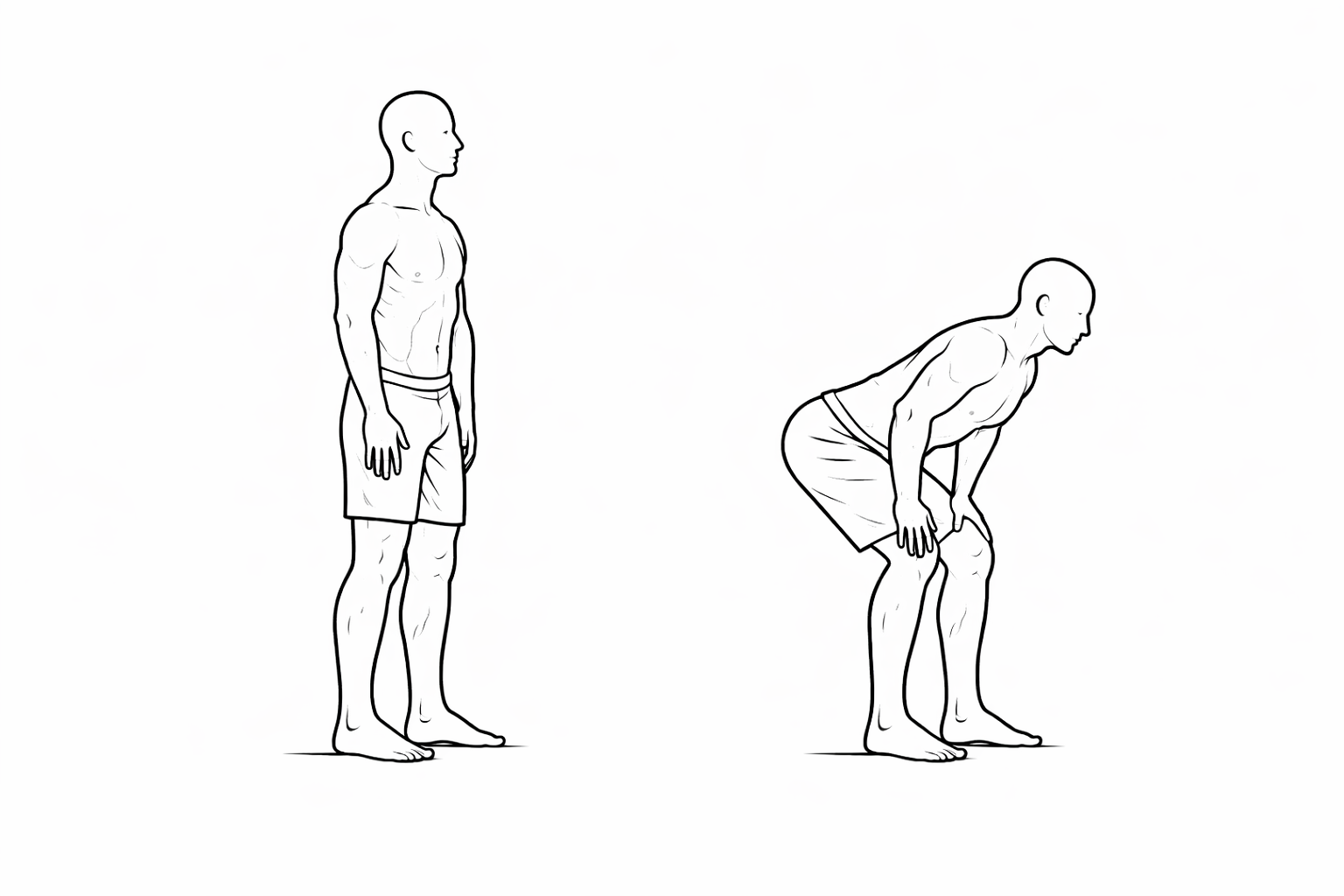 Daily movement tips
Sleep / morning rule: In the first hour after getting up, avoid deep bending if you can. Stay mostly upright and use short walks instead. When you must bend, keep the hip-hinge pattern and neutral spine. To put on your socks and shoes: sit down, bring your feet closer to you by bending your knee (rest your foot on something if possible), and gently lean forward with a neutral back and light brace. I know this sounds tedious, but it's worth the extra attention if you're in pain from morning bending.
How to lift safely
- Stand close to the object so you do not have to reach far.
- Breathe in and perform your abdominal brace before you start the lift.
- Hinge at your hips with a small knee bend, keeping the object as close to you as possible.
- Use your legs to stand up and avoid twisting while you lift; turn with your feet instead.
- Perform the lift slowly. This gives you time to set up properly and remain in safe postures.
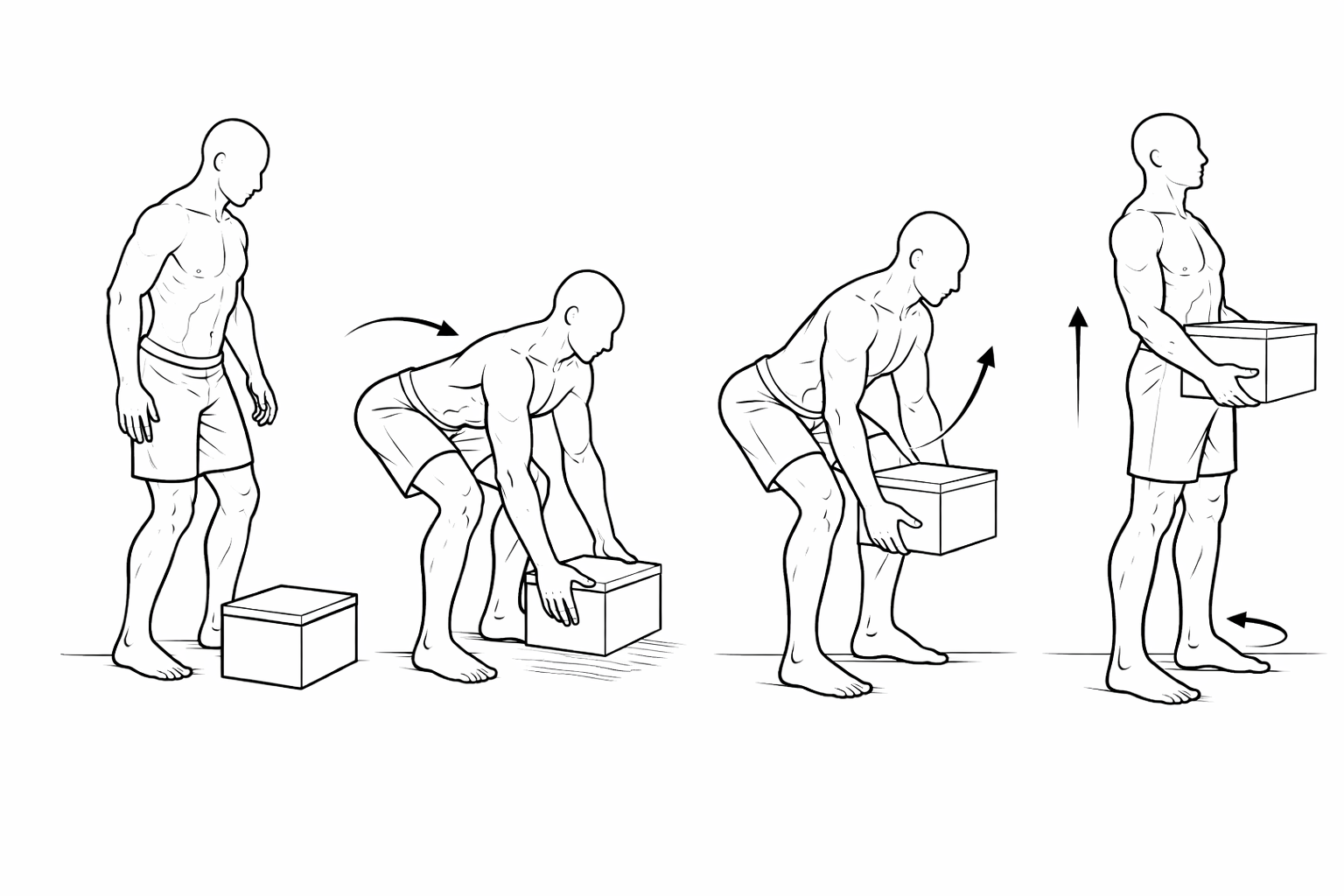 Keeping the object close reduces the moment arm
Keeping the object close to your body reduces the moment arm (the perpendicular distance between your low back and the force of the object you're holding). This drastically reduces the force required from your spinal extensor muscles and the strain on your lower back.
Quick tips
- Change postures often
- Break up extended sitting and extended standing
- Try to change postures (even briefly) every 20-40 minutes
- Avoid reaching and awkward postures when possible. Move closer to your target
- Minimize twisting and lateral bending, especially when lifting something
- Keep items close to you when carrying and lifting
- If the object is heavy, carry it symmetrically
- Use external support if you have to bend over for extended periods
- Railings, countertops, or even your own thighs are great places to get extra support and reduce strain on your lower back
- If getting out of bed or off the couch is painful: roll on your side to the edge, position your feet on the floor, then stand up slowly with a light brace, using your arms to push off
- Plan physically demanding tasks for when you are well rested. Do not underestimate the effects of fatigue
- Avoid heavy lifting and bending first thing in the morning, if possible
- Our discs swell up with water overnight, making some backs extra sensitive first thing in the morning. Wait 30-60 minutes before jumping into activities that load your back. Walking is a great way to dissipate this effect.